Tshwane water is “unsafe for human consumption”, Parliament hears
Tshwane water is “unsafe for human consumption”, Parliament hears
Criminal case opened after hundreds of people fall ill with gastrointestinal illnesses due to unchlorinated drinking water in Tshwane
Seth Thorne
News|
Pretoria
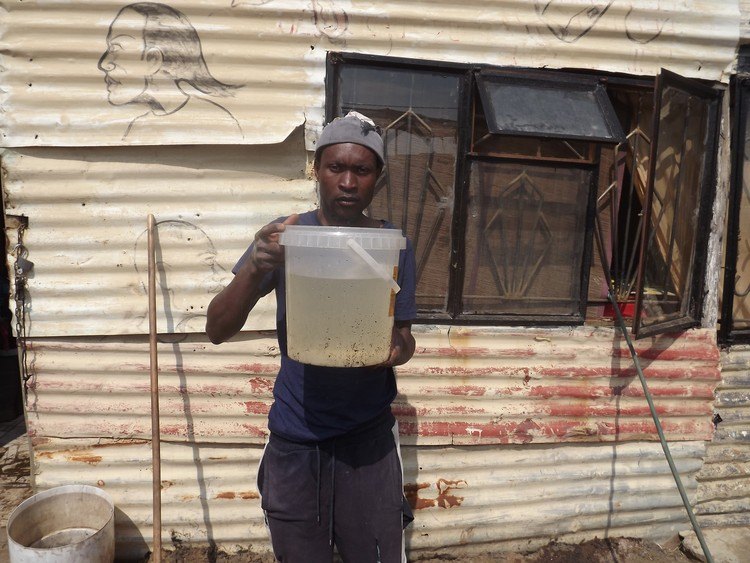
Juvenile Nahasse, who lives in Zithobeni in Bronkhorstspruit, shows a bucket of discoloured water he fetched from a tap in his home on 22 September. Less than a month later, the government finally confirmed that the water system had been contaminated. Archive photo: Warren Mabona
- The Department of Water and Sanitation has discovered that a water treatment works in Tshwane supplying the Pretoria CBD has not been chlorinating its water.
- This comes as nearly 600 people have been reported to have contracted gastrointestinal illnesses in another part of Tshwane due to unchlorinated, sewage-polluted water.
- Members of Parliament on Friday heard how the water supply was compromised, with the municipality ignoring red flags for years.
- The department has opened a criminal case against City of Tshwane for failing to provide required information or providing misleading information.
The City of Tshwane’s chlorination challenges have extended beyond Bronkhorstspruit, where nearly 600 people reportedly contracted gastrointestinal illnesses in recent weeks due to unchlorinated, sewage-polluted water.
The Department of Water and Sanitation (DWS) revealed in Parliament on Friday that tests at a water treatment works supplying the Pretoria city centre had found the water to be “unsafe for human consumption”.
Water department officials were briefing the portfolio committee on health over the water crisis in Tshwane.
Deputy minister David Mahlobo also announced that the department opened a criminal case against the City of Tshwane on 18 October for failing to provide the required information or providing misleading information. He is still in talks with the National Prosecuting Authority regarding additional charges.
He also welcomed the announcement of an investigation by the Public Protector, adding that they are also engaging with the South African Human Rights Commission.
Sean Phillips, director-general at DWS, said that after discovering the Bronkhorstspruit Water Treatment Works (WTW) had not been chlorinating its water for three weeks, the department decided to investigate chlorination across the metro.
An inspection of Findlay Reservoir at the Fountains water treatment works on 21 October found that the water had not been disinfected with chlorine. Tests found that E. coli bacteria levels were above the national standard.
The contamination leak was identified, and the City has emptied the reservoir. Pretoria city centre and surrounding areas are now receiving water from Rand Water. Residents and businesses have been advised to boil tap water before use until further notice.
Responding to questions by MPs, Phillips said that reported cases of gastrointestinal illnesses in the area could be related to the chlorination issues at the plant.
The DWS DG said that historical underinvestment in maintenance and upgrades has created a “downward spiral” where leaks and breakdowns are frequent. He said that without dedicating revenue towards maintenance and upgrades (ring-fencing revenue), the spiral would continue.
Tshwane warned about crisis months ago
Detailing the impact of the Bronkhorstspruit water contamination, health minister Aaron Motsoaledi told Parliament that health facilities in Bronkhorstspruit, Zithobeni, Dark City, Rethabiseng and Sokhulumi had recorded 595 cases of acute gastrointestinal illness between 7 and 19 October, including 262 children under five.
Stool tests identified several pathogens, including Norovirus, Campylobacter, Shigella and Sapovirus. No deaths were reported.
The Bronkhorstspruit water treatment works (WTW) abstracted raw water from the Bronkhorstspruit River. The plant had been operating without chlorination for 21 days, from 23 September 2026 until it was shut down on 14 October 2026. Disinfection officially started on 16 October.
DWS officials said the river is polluted by dysfunctional upstream wastewater plants in Delmas and Botleng under the Victor Khanye Local Municipality, alongside non-operational municipal sewage pump stations at Riamar Park and Lanham Street in Tshwane, as well as agricultural, urban and industrial runoff.
Pollution from the Delmas wastewater treatment works in particular has persisted for years. The municipality’s 2017 action plan was never implemented. A criminal case was opened in 2020 over failure to comply with a directive, and the docket is with the NPA. A 2025 inspection found operations deteriorated, with pollution still ongoing. MPs on Friday requested a status update on this case.
Mike Muller, a water policy expert and former water DG, told GroundUp that proper disinfection is essential, with enough residual chlorine remaining in the water when it leaves the treatment works.
Research shows wastewater treatment is declining despite population growth. Upgrading treatment plants will achieve little if sewage never reaches them. Add polluted runoff from intensive agriculture and urban and industrial areas, and the water is increasingly under strain.
Head of compliance monitoring at DWS, Anet Muir, said treating heavily polluted water requires a fully operational facility. Instead, the Bronkhorstspruit facility was allowed to deteriorate.
In the 2023 Blue Drop assessment, the plant scored 42%, with regulators flagging inadequate monitoring and poor water safety planning.
DWS issued a formal regulatory letter to Tshwane in February 2026. Tshwane committed in a March corrective action plan to secure chemical supplies with Rand Water’s support, refurbish sand filters by May, upgrade raw-water pumps by July, and repair sludge and flotation units by August.
However, Muir said that none of these commitments was implemented within the promised timeframes.
Affected communities are now relying on a fleet of 36 water tankers drawing clean water from tested hydrants in Cullinan and Rayton.
Chlorine saga
According to Rand Water, problems with chemical supply contracts in Tshwane threaten uninterrupted water supply. Planned work to the temporarily decommissioned Bronkhorstspruit WTW includes commissioning and installing pumps and valves, recommissioning the upgrades of the treatment works and cleaning critical parts of the plant.
Although chlorination was restored on 16 October, independent testing by the Water Research Commission across 40 network sampling sites confirmed that while water quality is improving, tap water remains unsafe for human consumption and is restricted strictly to flushing toilets.
Tshwane mayor Nasiphi Moya called the chlorine shortage “indefensible” and said the crisis could have been prevented. She said that the plant manager has been suspended, and independent investigations are underway.
Officials said the price of chlorine had gone up 40%, which the City could not afford, and this led to the shortage. At a press conference on Monday, Moya had said the price had increased fourfold.
Moya admitted that communication had failed. The mayor said she had accepted “overall political responsibility” for the crisis but stressed that “political accountability must be accompanied by administrative accountability”.
Tshwane COO Vuyo Zitumane said many water and sanitation plants were operating under capacity. Zitumane said they are looking for an alternative supplier. The City had processed a quotation-based procurement for chemicals and approved a replacement chlorine tender. The current contract ends in December, she said.
Support independent journalism Donate using Payfast
Don't miss out on the latest news
We respect your privacy, and promise we won't spam you.